

If your company has a computer system or application that is connected to the internet, you should perform a pentest before your vulnerabilities are exploited. Penetration testing is the most effective method for assessing and improving your security level in terms of price and quality. At the Security Factory, your test can kick off within days of the scoping call, without cutting corners on quality.

Our pentest, or penetration test, is a security exercise, an analysis, where our expert pentesters simulate a series of attacks on your environment, application (web, mobile, or API) or network to find and list your vulnerabilities, their exploitability which attackers could take advantage of and their impact. Our certified experts go beyond automated scanners, uncovering logic flaws, chained vulnerabilities and business-context risks that tools alone can’t find.
With our online reporting platform you can follow findings in real time while testing is still ongoing. This allows teams to act immediately instead of waiting for the final report. The output of our pentest is to list your vulnerabilities, the risks they may pose to your application or network, and a concluding report. Common vulnerabilities include design errors, configuration errors, software bugs etc.
Vulnerabilities found during this penetration test can be used to improve your network security, patch your applications, identify common weaknesses across applications, and in general strengthen your entire security posture against future attacks.
It’s best to have a pentest performed by somebody with practically no knowledge of how your inner network or application is secured in light of the fact that they may be able to uncover vulnerabilities missed by the developers who build it. That’s where the Security Factory comes in. Our pentesters or ethical hackers systematically attempt to penetrate a computer system, application or environment commissioned by its owners, you – and, most importantly, with your permission – to tests measure the distribution and severity of your vulnerabilities and their exploitability. Our ethical hackers use the same skills, methods and techniques to carry out a penetration test as their unethical counterparts.
We combine AI-powered scanning and analysis with the deep contextual judgment of our certified pentesters. AI accelerates coverage and surfaces patterns at scale. Our experts go further, chaining vulnerabilities, reasoning about your business logic and finding what tools simply cannot.









Our online reporting platform gives you live visibility into the test as it happens. Every finding goes through a rapid quality check before being pushed to your dashboard, so your team can act immediately, not after the fact.
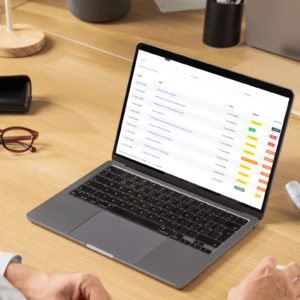
A pentest can be performed both manual or automated. The purpose of the two tests is the same: to test measure the distribution and severity of your vulnerabilities, their exploitability which attackers could take advantage of and their impact. The difference between these two tests is the way they are conducted. An automated pentest is done by an automated tool. As the name suggests a manual pentest is done by humans, experts in this field. At the Security Factory, manual penetration testing is at the core of everything we do. Our testers use AI-assisted automated tools where they genuinely add value: reconnaissance, asset discovery, scanning for known CVEs. But the real work is done by humans. It’s the only way to uncover logic flaws, chained exploits, and vulnerabilities that are unique to your environment.




Before each penetration test, we start with a personal introductory meeting with all key stakeholders. In this session, we outline the scope and discuss the approach for performing a penetration test on the customer’s systems. The test only delivers real value when it’s aligned with the customer’s context and requirements. Once all details are finalized, the penetration test is performed within the agreed timeframe.
Following the test, a review meeting is held to present the identified vulnerabilities along with recommended solutions. A comprehensive report is also provided. More information about our online platform, where customers can log in to monitor and evaluate the security of their applications in real time during testing? New Penetration Test Reporting for Real-Time Insight
With our real-time insight feature, you don’t have to wait until the end of the test. As our testers work, each finding goes through a short internal quality check before being shared. Once validated, it’s immediately pushed to you through our online platform allowing you to track them and take early action — even before the final report is delivered.
Want to learn more about how our platform lets you monitor and evaluate your application’s security in real time during testing? Discover our blog about our Penetration Test Reporting with Real-Time Insight
Web application penetration testing focuses on identifying security vulnerabilities in web-based applications, such as login forms, user inputs, APIs, and session management. It targets application-specific risks like SQL injection, cross-site scripting (XSS), broken authentication, and insecure configurations. The goal is to uncover flaws that could be exploited through the web interface.
Network penetration testing, on the other hand, assesses the security of the underlying network infrastructure, such as servers, routers, switches, and firewalls. It can be conducted externally (from outside the organization) or internally (from within the network) and focuses on vulnerabilities like open ports, outdated software, misconfigurations, and weak credentials.
In short: web app testing targets the software layer, while network testing targets the infrastructure layer.
External penetration testing simulates an attack from outside your organization’s network, typically over the internet. It focuses on publicly accessible systems such as web applications, email servers, firewalls, or VPNs, assessing how vulnerable they are to external threats like hackers or malicious bots.
Internal penetration testing, on the other hand, simulates an attack from within your network, such as from a compromised employee device or a malicious insider. It evaluates what an attacker could access if they bypassed external defenses or had internal access, focusing on internal systems, network segmentation, and privilege escalation. TSF never requests credentials for this type of test and always performs the assessment without initial access to accounts.
Together, both approaches provide a comprehensive view of your organization’s security posture
The ideal frequency for penetration testing depends on your industry, the sensitivity of your data, and how attractive your systems are to potential attackers.
For organizations handling highly sensitive information, such as financial services, healthcare, or government agencies, it’s recommended to conduct penetration tests multiple times per year. This helps ensure you’re staying ahead of evolving attack methods.
For companies in less sensitive sectors, penetration tests should still be performed regularly, especially after significant changes, such as launching a new application version, adding key features, making major infrastructure changes (e.g. new firewalls, cloud migrations), or reorganizing your network.
Penetration testing isn’t just about identifying technical vulnerabilities. It’s also a valuable way to assess how well internal teams, like IT, development, and security, are working together to maintain a secure environment. It should be viewed not as a one-time event, but as an ongoing best practice integrated into your security strategy.
In short, test regularly, and always test when something significant changes.
A penetration test (or pentest) is an expert-led security assessment where certified professionals combine tool-assisted scanning with deep contextual analysis. Testers simulate real-world attacks, actively exploiting vulnerabilities to understand their impact, uncover logic flaws or complex attack paths that scanners can’t detect, and provide detailed insight into the actual risks your organization faces. Every pentest is customized to your systems and business logic.
In short:
External Penetration Testing
Simulates an attack from outside the organization, targeting publicly accessible assets like websites, mail servers, and firewalls.
Internal Penetration Testing
Mimics an attack from within the network, such as by a malicious employee or someone with internal access, to test what can be done once the perimeter is breached.
Cloud Penetration Testing
Targets cloud-based infrastructure (AWS, Azure, Google Cloud, etc.) to identify misconfigurations, insecure interfaces, and weaknesses in cloud-specific services.
Web Application Penetration Testing
Focuses on identifying security flaws in web-based applications, including issues like SQL injection, cross-site scripting (XSS), broken authentication, and insecure APIs.
Additional Code Review
As part of our web application tests, we also offer an optional source code review. Not only will testing with application source code result in a much more efficient test. It will also provide the opportunity to detect much more complex issues that typically take a lot longer to find in a normal test.
Mobile Application Penetration Testing
Focuses on mobile apps (iOS, Android) and their interaction with backend services, checking for insecure storage, weak authentication, and data leakage.
API Testing
Focuses on evaluating the security of application programming interfaces (APIs). The test checks for common vulnerabilities such as improper authentication, lack of encryption, and insufficient access controls. It ensures that APIs are securely handling sensitive data and preventing unauthorized access.
Fat/Thick Client Testing
Focuses on security assessments of desktop applications that are installed on end-user devices. These applications often interact with backend systems and store sensitive data locally. The test evaluates risks such as weak encryption, insecure data storage, or potential vulnerabilities in client-server communication.
Kiosk Breakout Testing
Tests the security of self-service kiosks (e.g., in retail or public spaces) to see if an attacker can break out of the kiosk’s restricted environment. The test evaluates the risk of unauthorized access to the underlying system or network, which could lead to data theft or malware installation.
Wireless Penetration Testing
Tests the security of wireless networks (Wi-Fi), including encryption protocols, rogue access points, and wireless client vulnerabilities.
Digital Social Engineering
Evaluates the human element of security, often through phishing or pretexting to determine how susceptible employees are to manipulation.
Physical Social Engineering
Assesses physical security by attempting to gain unauthorized access to buildings, data centers, or secure areas.This type of test often includes a health check, where we look for common physical security issues—such as passwords on post-its, unlocked devices, or unattended access badges.
USB Drop Test
Simulates a scenario where malicious USB devices are dropped in public or accessible areas, such as office spaces or parking lots. The test evaluates whether employees are likely to plug in these devices, potentially giving attackers unauthorized access to the network or introducing malware.
Red Team Testing
A full-scope, multi-layered simulation of a real-world attack that combines many of the above techniques over a longer period to test an organization’s detection and response capabilities.
Yes, that’s possible. AI can be used during penetration testing, depending on your preference. AI accelerates the parts of a pentest where speed and scale add genuine value. A human specialist still drives every engagement, manually validates every finding, and goes where automated tools cannot.